
Dr. Zoubida Charrouf: the Keeper of the Trees
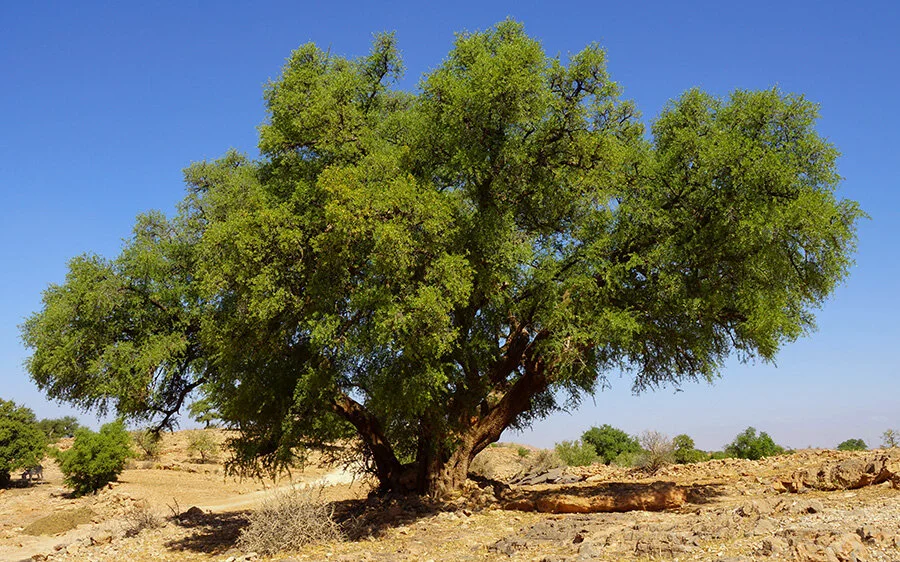
"The argan tree is the last bastion against desertification. Without this tree, the whole population will migrate to the big cities to find work elsewhere. That’s why we have to preserve it. Argan is part of the Moroccan heritage. We must preserve it because of the role it plays." — Dr Zoubida Charrouf, Seed of Life
So many of us love argan oil (ⴰⵔⴳⴰⵏ, أرغان), but too few of us know of this important person in this plants recent story. She has dedicated the entirety of her adult life to its preservation and understanding, both as a resource and a deeply important aspect of Moroccan heritage. As we use this resource, the liquid life force of the argan tree, we would do well to also pay tribute in our hearts to Dr. Charrouf, as well as the many unknown individuals and communities who have tended the land for so long, and continue to work to make this precious oil accessible.
Dr. Charrouf, seen below, is a personal hero of mine. A superhero, really. I think of her every single day, and I wonder what may have happened without her willingness to intervene and nearly single-handedly save a tree that was on the brink of disappearance. I say "nearly" because holistic perseverance is not possible without true reciprocal relationship with the land itself.
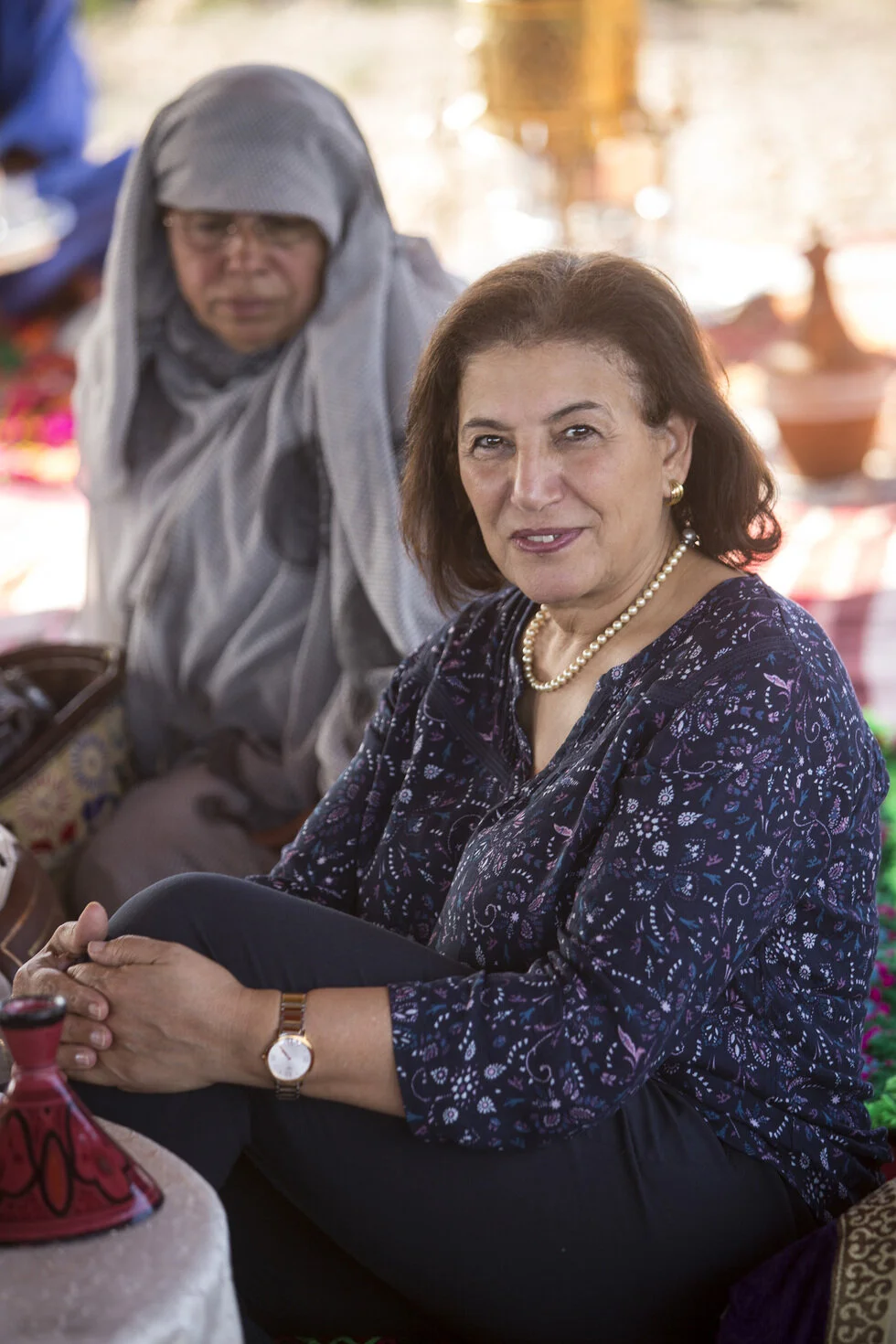
Current professor of chemistry in Rabat, scientist, environmentalist, and feminist in her own right, Dr. Charrouf drew attention to a tree in the early 90’s that had been largely untapped, and was rapidly falling prey to desertification. She understood that the massive annual loss of this particular tree would cause not only devastating environmental effects, but also the collapse of a major cornerstone of Moroccan culture. This tree is known as argan. Endemic to Morocco, it takes around 50 years to produce fruit ripe and ready for harvesting, and can live up to 200 years. Throughout their long life, the argan stands as a promise to provide for those living in arid and challenging environments, as long as the time is given to regard this plant as kin as well. It's a longstanding part of the place itself - the land and the people. It doesn’t ask for much other than care and communion, and if provided for, it will give back plentifully.
Argan is a living ancestor and a descendant all at once.
Dr. Charrouf currently oversees the operation of over 30 argan cooperatives, employing women in the Atlas Mountains and offering them new chances for financial stability and empowerment through career and community. She ensures that the cooperatives are safe, comfortable, and running smoothly, and that there is of course ongoing care of the people as well as the plant. She also sees to the science of the extraction process be dutifully upheld. “I work until about midnight everyday and then I like to start at 8 a.m. or sometimes 8.30 am the next day,” she says.
Her mission is equally split between two passions - to ensure the successful growth of this powerful plant, and to support the women who deserve recognition, respect, and independence. She personally understands the essential nature of the latter as she's lived and worked for so long in a social environment that aches for her failure as a female working in the scientific realm. In her words, “Men would tell me that I’m disrupting their home and that the women should return to their place." Before approaching IDRC (International Development Research Centre), says Charrouf, “I knocked at several doors, but no one believed in my project.”
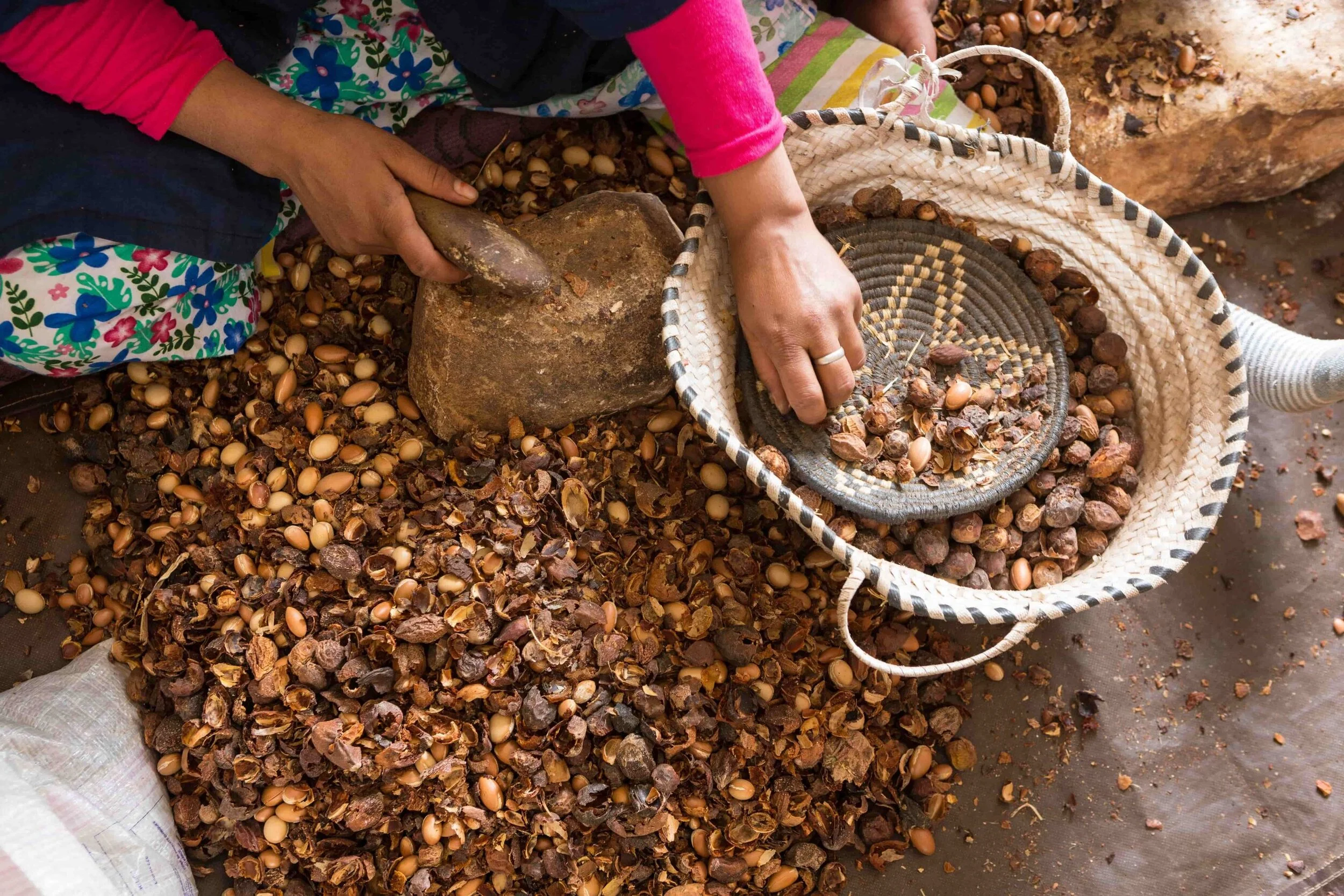
Today, argan oil can be found in many products even by supremely popular brands, and is known as a high-value product on the international market. It is certified internationally as a labeled Protected Geographical Indication (PGI) product. PGI labelling was granted to Moroccan argan oil in 2009; the first product on the African continent to receive such protection - and this is thanks to the ongoing dedicated work of Dr Charrouf.
Despite the naysayers, outright threats and social shame from the get-go, she has proceeded to answer to a larger calling. As she continues to do so, she simultaneously offers opportunity for others to do the same for themselves - all while tending to the land, and enacting ongoing reciprocal exchange.
“Being part of the cooperative freed me from tedious domestic work in people’s homes. Now I’m learning to read and write and I’ve learned how to ensure the quality of the argan kernels. The cooperative has made me more independent. I’ve been able to visit other cooperatives in other provinces. I’ve seen how girls and women like me have been able to shape their own destiny and move ahead to develop their cooperatives.” — member of the Taitmatine Cooperative, Morocco
Sustainably grown and responsibly sourced Moroccan argan oil can be found in Holy Rose Facial Serum, as well as All Over Oil.
